Keeping a swimming pool sparkling and safe requires more than a quick skim. How to clean a pool and properly close an empty pool is a question every homeowner should understand to maintain water quality and protect expensive equipment. With the right routine, you can enjoy a crystal-clear swim season and prevent costly repairs during the off-season.
Step-by-Step Pool Cleaning Routine
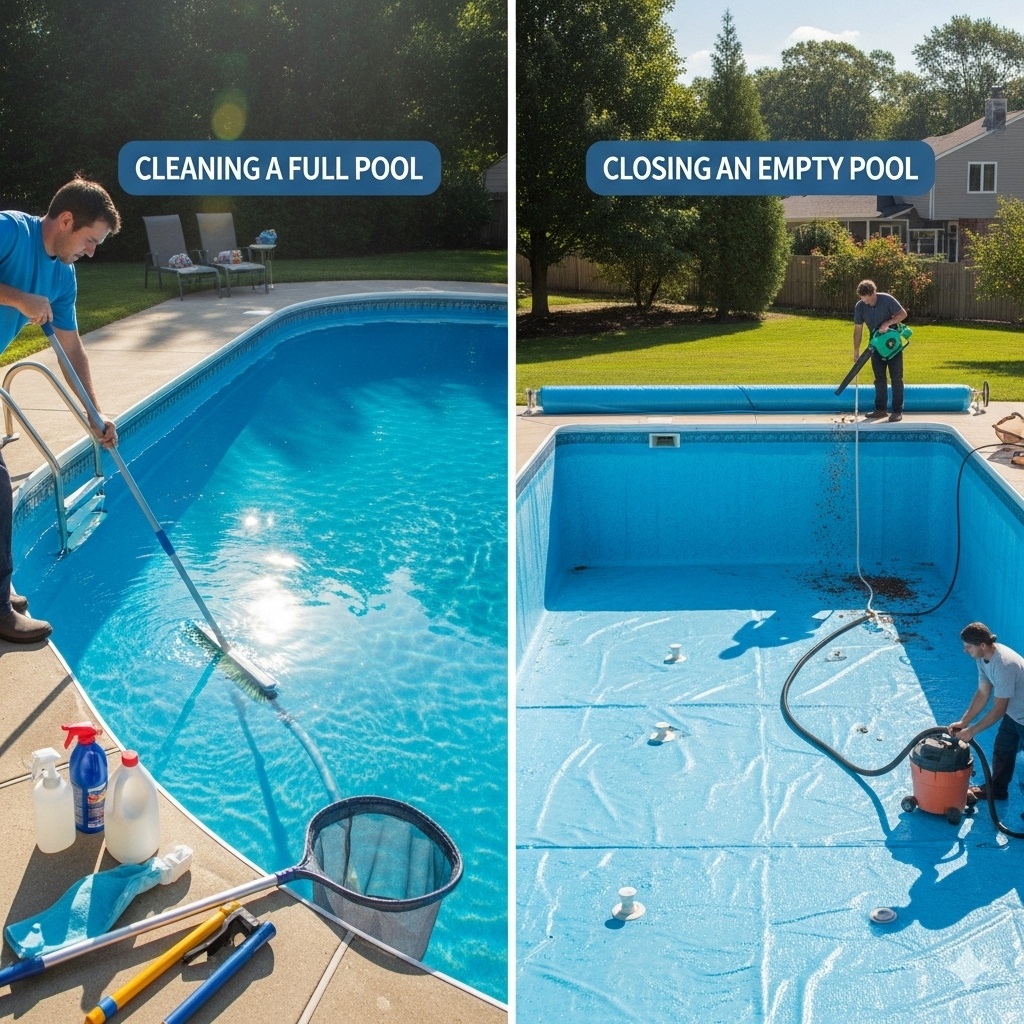
First, remove floating debris with a skimmer net to keep leaves and insects from sinking. Next, brush the walls and floor to loosen algae and dirt. Then, vacuum the pool thoroughly, either with a manual vacuum or an automatic cleaner. After physical cleaning, test the water’s pH, chlorine, and alkalinity levels. Balance these chemicals to recommended ranges—typically a pH of 7.2–7.6 and free chlorine between 1–3 ppm. Regularly backwash or clean the filter to maintain strong circulation. As a result, the water stays clear and safe for swimmers.
Preparing to Close an Empty Pool
When the season ends or if you need to leave the pool empty for repairs, proper closure protects the structure. Start by draining the water below the skimmer line. Completely remove any remaining debris and scrub the surfaces to prevent staining. After that, dry the interior thoroughly to reduce the risk of mold. Next, disconnect pumps, heaters, and filters, storing them in a dry place. To avoid cracking during cold months, add an air pillow or similar expansion device if temperatures drop below freezing.
Extra Tips for Long-Term Protection
Always inspect tiles, liners, and seals for cracks before covering. Choose a durable, UV-resistant cover that fits tightly to keep out rainwater and animals. Furthermore, check the area around the pool for standing water to prevent frost heave. These simple steps ensure your pool remains in excellent condition until the next swim season begins.